
The Cost of the Final Mile
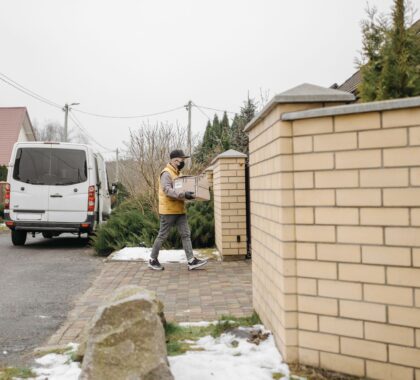
A pharmacy in a suburban neighborhood handles fifty urgent prescriptions a day. Five of those customers need the medication immediately but cannot leave their homes. A driver takes twenty minutes to navigate traffic and park. That driver costs the business a set hourly wage plus fuel and vehicle wear. If the driver makes four such trips an hour, the cost per drop is a fraction of the hourly rate. However, when traffic peaks, those four trips drop to two. The cost per delivery doubles. This is the specific friction point where automation becomes a financial calculation rather than a novelty.
Drone delivery retail works in 2026 for high-value, low-weight payloads on fixed, short-distance routes. It fails for heavy items, unpredictable urban flight paths, and low-margin goods where the delivery fee does not cover the electricity and maintenance of the aircraft. It is a tool for specific inventory, not a total replacement for the delivery van.
The Unit Economics of Air Delivery
To see if this system fits your operation, look at your payload weight and your current delivery radius. Most commercial drones in 2026 handle payloads under five pounds. If your average order is a gallon of milk or a bag of potting soil, a drone is the wrong tool. If your average order is a prescription, a smartphone, or a high-margin skincare product, the math changes.
Consider the cost of a missed delivery window. A customer who does not receive a critical item within two hours may cancel the order or switch providers. If a customer spends $100 per order and you lose three such customers a week, you lose $1,200 a month in direct revenue. A drone system provides coverage against this repeat loss. The measure of success is the hit rate: how many orders are delivered within the promised window versus how many are delayed by ground traffic.
Ground delivery is subject to variables you cannot control. Road construction, accidents, and weather slow a van. A drone flies a straight line. It removes the variable of traffic from the equation. The goal is not replacing staff. The goal is removing the driver from the tasks that are most inefficient.
Where the System Fails
Automation cannot solve every logistical problem. A drone cannot carry a 20-pound box of detergent. It cannot navigate a high-rise apartment complex without a designated landing pad. It cannot handle a customer who changes their delivery address while the aircraft is in the air. If your business relies on bulky goods or delivery to multi-unit dwellings without infrastructure, the technology will not improve your margins.
Regulatory reality also dictates the boundaries. Flight paths are restricted near airports and government buildings. In 2026, the legal framework allows for Beyond Visual Line of Sight (BVLOS) operations in specific corridors. If your store is located in a zone with heavy flight restrictions, the drone must take a detour. A detour increases flight time and battery drain. When the flight path is no longer a straight line, the cost per drop rises. You must map your delivery zone against current FAA and local ordinances to see if the flight path is viable.
Practical Implementation for Retailers
Implementing this system requires three specific components: a launch hub, a landing zone, and a dispatch trigger. The hub is usually a modified roof or a fenced parking area. The landing zone is a marked spot at the customer’s property. The trigger is the moment the order is marked as “Ready” in your point-of-sale system.
Let us look at the arithmetic for a small electronics retailer. The store sells high-margin accessories. The average order value is $75. The weight is under two pounds. The delivery radius is three miles. A courier takes 30 minutes for a round trip. In an eight-hour shift, a courier can realistically make 12 to 15 deliveries. This includes time for loading and parking. The cost of the courier’s labor is split across those 15 deliveries.
A drone system can launch a delivery every ten minutes. The electricity cost is negligible per flight. The primary cost is the capital expenditure of the drone and the monthly software license for flight management. If the drone increases the daily delivery capacity from 15 to 40, the business captures more local market share. The increase in volume offsets the monthly equipment lease. This is a volume play. If you only have two urgent deliveries a day, the equipment will sit idle and the investment will fail.
To integrate this into a broader business strategy, you need an automation layer that handles the order flow. This is where what we build becomes relevant. We create the logic that decides whether an order goes to a driver or a drone based on weight, distance, and urgency. Without this logic, you are simply adding a new piece of hardware that your staff must manage manually, which adds labor instead of reducing it.
Scaling the Operation
Once the initial route is profitable, scaling requires a focus on density. One drone can serve a radius of five miles, but its efficiency increases as the number of drops per flight increases. While most current systems are one-to-one, multi-drop drones are entering the market. A drone that can drop three small packages in one circuit reduces the cost per drop by two-thirds.
The operational risk is hardware failure. A drone that crashes is a total loss of the asset and the payload. You must factor a replacement rate into your monthly overhead. If a drone costs $5,000 and lasts for 2,000 flights before needing a major overhaul or replacement, the hardware cost is $2.50 per flight. You add this to your electricity and software costs to find your true floor price for delivery.
Many operators attempt to launch these systems without a clear map of their delivery zones. They assume the drone will handle any address. This leads to failed deliveries and customer frustration. The correct approach is to define “Drone-Ready Zones.” These are areas where the landing site is clear and the flight path is legal. You offer drone delivery only to customers in these zones. This maintains a high hit rate and protects the equipment.
Moving Toward Automation
The shift to drone delivery is not about following a trend. It is about removing the most expensive and unpredictable part of the supply chain. When you price the problem of the last mile, you see that the cost is not the distance, but the time spent not moving.
If your current delivery model loses revenue due to speed constraints or high labor costs for small items, you are a candidate for this system. The first step is not buying a drone. The first step is analyzing your order data to find the specific payload and route patterns that fit the hardware’s limits. For those who want to audit their current logistics and find where automation can stop a recurring loss, AI consulting for your operation provides the necessary framework to calculate these margins before you spend capital on hardware.
In 2026, the technology is stable. The regulations are clearer. The remaining variable is the business model. Those who treat drones as a marketing gimmick will find the costs outweigh the benefits. Those who treat them as a tool for high-frequency, low-weight logistics will find a way to lower their cost per drop and increase their delivery hit rate.