

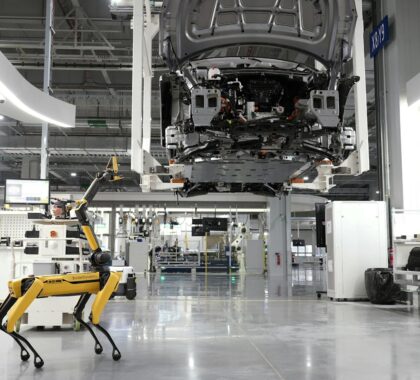
In 2026, over 60% of global manufacturers are actively deploying robotics AI integration on their factory floors — not as a pilot project, but as core infrastructure. This isn’t automation as we’ve known it. It’s a fundamental shift in how physical systems think, adapt, and operate in real time.
What’s Driving the Shift to Physical AI in Manufacturing
For decades, industrial robotics followed rigid, pre-programmed instructions. Today, robotics AI integration enables machines to perceive their environments, make decisions, and learn from outcomes — all without human intervention. Advances in edge computing, sensor fusion, and foundation models for physical systems have converged to make this possible at scale.
The result? Production lines that self-optimize, quality control systems that detect defects invisible to the human eye, and supply chains that reconfigure in response to real-time demand signals. This is not incremental improvement. It is a structural transformation of manufacturing economics.
Industry Impact: From Automation to Autonomy
The implications extend far beyond efficiency gains. Robotics AI integration is reshaping competitive dynamics across sectors:
- Predictive maintenance powered by AI-driven robotics reduces unplanned downtime by up to 45%, according to current industry benchmarks.
- Flexible manufacturing allows facilities to switch product lines in hours rather than weeks, enabling mass customization at near-mass-production costs.
- Workforce augmentation shifts human roles from repetitive tasks to supervision, exception handling, and continuous improvement — elevating both productivity and job quality.
Companies that delay adoption risk falling behind on cost, speed, and quality simultaneously. The window for competitive parity is narrowing rapidly. [INTERNAL_LINK: AI automation solutions for manufacturing]
How Businesses Can Act Now
The most effective approach to robotics AI integration starts with a clear operational diagnosis — identifying the highest-friction processes where intelligent automation delivers measurable ROI. Alpha Edge Technology works with emerging tech companies to design and deploy AI automation solutions that align with existing infrastructure and scale with growth.
Key steps for leadership teams include:
- Auditing current workflows for AI-readiness and data maturity.
- Prioritizing use cases with clear, quantifiable outcomes — such as throughput improvement or defect reduction.
- Building cross-functional teams that bridge operations, engineering, and data science from day one.
Early movers are already capturing outsized advantages in margin, resilience, and speed to market. The question is no longer whether to adopt robotics AI integration, but how quickly and strategically you can deploy it. [INTERNAL_LINK: Alpha Edge Technology manufacturing solutions]
The Road Ahead
Physical AI is not a future concept — it is the present reality of competitive manufacturing. As models become more capable and hardware costs continue to decline, robotics AI integration will become as essential as electricity was to the factories of the last century. Organizations that invest in this capability today are not just optimizing operations. They are defining the next era of industrial leadership.