

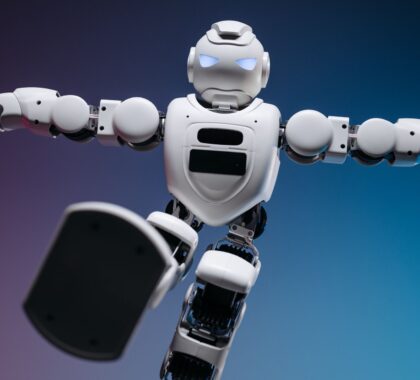
A single demonstration this week showed a humanoid robot completing a full‑body assembly task without human guidance, marking a turning point for industrial robotics automation. Google DeepMind announced that Gemini Robotics 2 now delivers coordinated whole‑body motion, enabling machines to reach, grasp, and manipulate objects across a 360‑degree workspace.
What Happened
On August 3, 2026, DeepMind released a technical briefing and video illustrating Gemini Robotics 2 controlling a bipedal platform that performed a multi‑step electronics build. The system integrates perception, planning, and low‑level motor control into a single model, removing the need for separate controllers for each limb. Early benchmarks indicate a 40 % reduction in cycle time compared with the previous generation.
Why It Matters for Industrial Robotics Automation
The breakthrough addresses a long‑standing bottleneck: limited coordination between arms, torso, and legs in factory‑floor robots. With full‑body control, manufacturers can deploy a single unit for tasks that previously required multiple specialized machines. This shift promises lower capital expenditure, smaller footprints, and faster line re‑configuration — key advantages for sectors such as automotive, electronics, and aerospace.
- Unified motion planning reduces integration complexity.
- Real‑time adaptation to part variance improves yield.
- Energy‑efficient whole‑body trajectories cut operating costs.
Implications for Business Leaders
Companies evaluating automation roadmaps should treat Gemini Robotics 2 as a catalyst for re‑thinking cell design. The ability to program high‑level objectives — “assemble this sub‑assembly” — rather than joint‑level trajectories accelerates deployment cycles from months to weeks. Decision‑makers can now pilot a single flexible cell before committing to large‑scale rollouts. For a deeper dive on aligning AI‑driven automation with corporate strategy, see [INTERNAL_LINK: AI automation strategy].
Next Steps for Alpha Edge Clients
Alpha Edge recommends a three‑phase approach: first, run a proof‑of‑concept on a high‑mix, low‑volume line; second, integrate the robot’s perception stack with existing MES and ERP data using our integration framework; third, scale to additional cells while leveraging continuous learning from fleet telemetry. Our robotics integration services team can accelerate each phase — learn more at [INTERNAL_LINK: robotics integration services].
Gemini Robotics 2 signals that the era of siloed, single‑task robots is ending. Organizations that adopt full‑body control early will capture productivity gains, reduce changeover risk, and position themselves at the forefront of the next industrial revolution.