

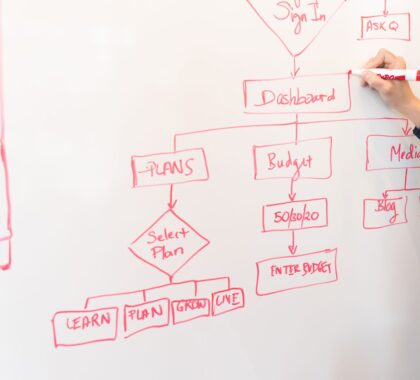
A typical day at a mid‑size solar installation firm
The office receives a service request through the customer portal every morning. A coordinator checks the address, verifies warranty status, and creates a ticket in the dispatch system. The ticket then moves to a scheduler who assigns a technician based on location and skill. The technician performs the fix, fills out a paper form, and returns it to the office for invoicing. Finally, an accounts clerk matches the form to the ticket, generates an invoice, and emails the customer. This loop repeats dozens of times each week.
What Neo-Agent does for this workflow
Neo-Agent automates the trigger, decision, action, confirmation, and log steps while leaving the final approval and customer‑facing communication to a person. In plain terms, the system watches the portal, validates the request, picks the right technician, sends the work order, collects the digital completion note, and files the record. The human steps remain because they involve judgment about safety exceptions and the personal touch that keeps customers satisfied.
Why keeping the final approval human matters
When a technician reports a safety issue—such as exposed wiring on a roof—the system can flag it, but only a qualified supervisor can decide whether to halt the job, call for a specialist, or issue a waiver. That decision depends on experience, local regulations, and the technician’s tone in the note. Automating it would risk either unnecessary stops or overlooked hazards. Keeping that step human is a design choice that protects both the crew and the company’s liability.
Step‑by‑step example of the workflow in practice
Here is how a single request flows through Neo-Agent on a typical August day in 2026.
- Trigger – A homeowner submits a service request at 08:12 via the web portal. Neo-Agent logs the timestamp, extracts the address, and pulls the account ID from the CRM.
- Decision (eligibility) – The agent checks warranty status against the contract database. If the request is covered, it proceeds; if not, it adds a “non‑covered” tag and notifies the coordinator for a manual quote. (In our example the request is covered, so the flow continues.)
- Action (dispatch) – Neo-Agent queries the technician schedule, finds the nearest certified electrician with an open slot at 10:30, and sends a push notification to the technician’s tablet with the work order and a map link.
- Confirmation (completion) – The technician finishes the repair at 11:45, taps “Job Done” on the tablet, and uploads a photo of the replaced component. Neo-Agent validates the photo against a parts list, updates the ticket status to “Completed,” and stores the image in the file server.
- Log (record) – The agent writes a log entry that includes the request ID, technician ID, start and end times, parts used, and a hash of the photo for audit. It then emails an automated summary to the accounts clerk.
- Human step – final approval – The accounts clerk reviews the email summary, checks the photo for quality, and clicks “Approve Invoice.” Neo-Agent then generates the invoice, applies the agreed rate ($150 per hour), and sends it to the customer at 12:10.
Arithmetic you can verify: If the firm handles 20 such requests a day, each invoice averages $1,200 (2 hours × $150 + $900 parts). That is $24,000 daily revenue. Neo-Agent cuts the admin time from 15 minutes per ticket to 2 minutes, saving 260 minutes a day—or roughly $650 in labor at a $15 per‑hour admin rate.
How to put Neo-Agent to work in your operation
Start by mapping your own repeat‑loss workflow: list the trigger, the decision points, the actions, the confirmation, and the log. Identify which steps require judgment or customer contact; those stay human. Then run a pilot with Neo-Agent on the automatable slice. Our team can help you size the pilot, integrate with your existing CRM and scheduling tools, and measure the hit rate—how often the agent completes a cycle without human intervention.
When you are ready to discuss a pilot or a full rollout, book a session with our consulting group: AI consulting for your operation. You can also see how Neo-Agent fits inside our broader assistant layer by visiting Zephyr, our AI assistant layer.
Looking ahead – what stays human and what scales
In 2026 the winning automation strategy is not about removing people; it is about moving repeatable, rule‑based work to software and keeping the nuanced, exception‑handling steps with people. Neo-Agent gives you a clear line to draw: every time the system can verify a condition against a database, it can act; whenever the outcome depends on a specialist’s impression or a customer’s sentiment, a person stays in the loop. That balance reduces costly re‑work, keeps service quality high, and makes the technology a practical investment rather than a promise.